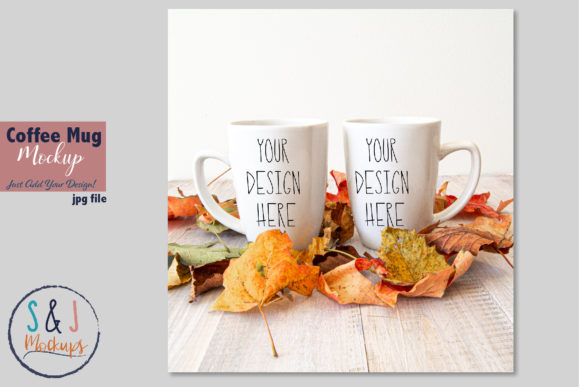
How a Fall Coffee Mug Mockup Transforms Your Design Showcase
When autumn arrives, the urge to create warm, seasonal designs intensifies. For designers, crafters, and small business owners, the challenge is not just in the creation but in the presentation. A Fall Coffee Mug Mockup offers an elegant bridge between your digital artwork and a real-world product experience, allowing you to present your designs in a context that feels immediate, desirable, and professional.
Mockups have evolved from simple placeholders into essential tools for visual communication. They allow you to remove the guesswork for your audience. Instead of asking someone to imagine what a pattern or illustration might look like on a ceramic surface, you show them directly. A high-quality mockup does this without the overhead of physical photography, studio lighting, or repeated setup costs.
The Real Problem Mockups Solve for Creators
Anyone who sells digital assets—whether SVG files, clipart bundles, or original illustrations—faces a common bottleneck: how to make a flat design feel tangible. Listing a plain PNG file or a vector thumbnail often fails to convey scale, material texture, or the emotional appeal of a finished product. This is where product mockups become invaluable. They provide a contextual stage.
Consider a seller offering autumn-themed clipart. A simple leaf motif or a pumpkin illustration, when placed on a Fall Coffee Mug Mockup, suddenly evokes cozy mornings, apple cider, and porch-side conversations. The design gains a life and a story. The buyer can see not just what they are purchasing, but what they can make with it. This shift from abstract asset to tangible outcome is powerful for conversion.
These high quality product mockups are great for mocking up your designs to showcase either your crafts or your clipart svg files you have for sale without having to take your own photos for each design. The time saved is enormous. Instead of photographing every single variation of a mug design—which would require buying multiple mugs, setting up lighting, and editing raw images—you use one consistent, beautiful base image and simply swap the artwork.
Understanding the Technical Foundation
At the heart of these mockups is a straightforward technical promise: 1 high resolution 300 pixel per inch jpeg image that is super simple to use. The 300 PPI specification is significant because it ensures your design retains crisp details, even when viewed at full size. This resolution matches professional print standards, so the mockup accurately reflects how a design would appear on a physical mug.
The simplicity is intentional. You do not need to manipulate complex layer masks, adjust perspective matrices, or understand alpha channels. Just open it up in your favorite editing software—photoshop, illustrator, canva, silhouette, etc—and add your design on top of it. The mockup is pre-rendered with realistic shadows, highlights, and curvature. Your task is to place your artwork in the designated area and let the existing photorealistic elements do the rest.
This workflow suits a wide range of skill levels. A professional graphic designer in Photoshop can fine-tune blending modes and opacity for subtle realism. A hobbyist using Canva can simply drag and drop an image onto the template. A silhouette user preparing a cut file portfolio can show the final look without ever making a physical prototype. The barrier to entry is near zero, yet the ceiling for quality is high.
Why Resolution and Format Matter for Fall Designs
Fall designs often incorporate intricate details: delicate leaf veins, hand-lettered typography, watercolor textures, or layered geometric patterns. A low-resolution mockup would blur these elements and undermine the perceived quality of your work. The 300 PPI JPEG preserves fine lines and subtle gradients, ensuring that your autumn motifs retain their intended visual impact.
The JPEG format itself is universally accessible. Unlike PSD or TIFF files that require specific software or significant storage space, a high-quality JPEG can be opened, edited, and saved on virtually any device. This universality aligns with the broad audience for fall-inspired goods—from Etsy sellers and print-on-demand entrepreneurs to social media content creators and educators demonstrating design principles.
Creative Applications Beyond Simple Product Listings
The use of a Fall Coffee Mug Mockup extends far beyond a single product photo. Consider these practical scenarios where mockups serve as versatile creative assets:
- Social Media Teasers: Build anticipation for a collection launch by posting a mockup with a blurred background or a partial crop. The realistic setting generates engagement and questions from followers.
- Portfolio Diversity: If you are a clipart creator, showing your designs applied to multiple product types—mugs, t-shirts, tote bags—demonstrates versatility. The mug mockup becomes one piece of a cohesive brand story.
- Seasonal Campaigns: A single mockup can be reused across multiple seasons by swapping the design. The mug remains constant; your artwork changes. This consistency helps build visual brand recognition.
- Tutorial and Educational Content: If you teach design techniques, a mockup provides a clear before-and-after example. Students can see how their flat creation transforms into a three-dimensional presentation.
- Client Proposals: Freelancers pitching custom mug designs to clients can use mockups to present realistic proofs without manufacturing samples. This saves money and speeds up the revision cycle.
Each of these applications leverages the same underlying principle: the mockup removes friction between seeing and believing. The audience does not need to interpret your design; they experience it.
Workflow Integration Across Skill Levels
The phrase "super simple to use" is not an exaggeration, but the experience does vary slightly depending on your chosen software. Understanding these nuances helps you get the most out of your mockup.
For Photoshop and Pro-Level Tools
Advanced users often prefer Photoshop for its layer control, blending options, and adjustment layers. When you just open it up in your favorite editing software, you can create a smart object layer that contains your design, allowing for non-destructive edits. You can also fine-tune the mockup's lighting by adding a soft gradient or adjusting the hue/saturation to match the mood of your fall design. If the mockup includes a separate shadow layer or a highlight overlay, you can tweak those independently for hyper-realistic results.
For Canva and Online Platforms
Canva users benefit from the mockup's straightforward nature. Because the image is a single high-resolution JPEG, you can upload it directly and place your design as an overlay. Canva's transparency and positioning tools allow you to align your artwork with the mug's surface. The key is to ensure your design is sized appropriately—using the mockup's dimensions as a guide—so it covers the intended area without distortion. For fall-themed clipart, this approach is especially forgiving and quick.
For Illustrator and Vector Workflows
If your design originates in Adobe Illustrator as a vector, you can export it as a high-resolution PNG or JPEG and place it onto the mockup in a raster editing program. Alternatively, some users prefer to keep their design in vector format and use Illustrator's raster effects to preview the composite. The mockup's 300 PPI resolution ensures that even exported vectors retain their sharp edges.
For Silhouette and Crafting Software
Silhouette users often focus on cut files, but a mug mockup helps them visualize the final applied product. By placing the design onto the mockup within Silhouette Studio's photo editing capabilities, crafters can produce realistic listing images that attract buyers looking for project inspiration. This is particularly useful for fall-themed SVG bundles where the buyer needs to see the end result before purchasing.
Characteristics That Define Exceptional Mockups
Not all mockups are created equal. High-quality product mockups share specific characteristics that make them effective for professional use. Understanding these helps you evaluate which mockup to invest in or create.
- Photorealistic Lighting: The best mockups use natural or studio lighting that creates authentic highlights and shadows. The mug should look like it was photographed in a real setting, with subtle reflections that respond to the environment.
- Appropriate Angle and Perspective: A three-quarter view or a slight top-down angle typically works best for mugs, as it shows both the surface design and the mug's shape. The perspective should be consistent with how a viewer would naturally hold or see the object.
- Neutral or Thematic Background: Many fall mockups include complementary settings—a wooden table, a scattering of leaves, a cozy blanket texture. These elements enhance the seasonal mood without distracting from the design itself.
- Clean Design Area: The region where you place your artwork should be clearly defined and free from overlapping shadows or reflections that would obscure your design. A well-made mockup guides your eye to the product.
- Scalable Resolution: As mentioned, 300 PPI ensures your design holds up under close inspection. This is non-negotiable for sellers who want to project professionalism.
These high quality product mockups are great for mocking up your designs to showcase either your crafts or your clipart svg files you have for sale without having to take your own photos for each design. The consistency across multiple designs is another underrated benefit. When you use the same mockup for an entire product line, your shop gains a cohesive visual identity. Customers recognize your brand by the consistent presentation style.
Real-World Relevance for Different Audiences
The broad utility of a Fall Coffee Mug Mockup means it serves diverse user groups in distinct ways. For business owners, the mockup accelerates time-to-market. Instead of waiting for a sample to arrive from a manufacturer, you can create listing images immediately. This agility is especially valuable during the fall season when trends shift quickly and consumer demand spikes.
For educators and researchers in design fields, mockups are teaching tools that illustrate the translation from 2D to 3D. They can demonstrate how scale, color, and positioning affect the perception of a design. A simple exercise—placing the same leaf pattern on a mug versus a flat card—reveals important principles of surface design.
Hobbyists and craft enthusiasts benefit from the low-risk experimentation. You can try a dozen different design variations on the same mug mockup in an afternoon, exploring color palettes and compositions that you might not have considered if you had to produce physical prototypes. The feedback loop is immediate and cost-free.
Consumers, too, indirectly benefit. When sellers present realistic mockups, buyers make more informed purchasing decisions. They can better assess whether a digital design fits their aesthetic needs, reducing returns and increasing satisfaction.
Practical Considerations for Best Results
To maximize the effectiveness of your mockup, keep a few practical guidelines in mind. First, pay attention to the curvature of the mug surface. Designs that wrap around the side will look more natural than those that appear flat. If your editing software supports distortion or warp tools, a slight adjustment can make your design conform to the mug's cylinder shape. Some mockups build this curvature into the design area, but if not, a minute transformation goes a long way.
Second, consider the color interaction between your design and the mug's base color. A white mug provides the highest contrast and truest color representation. A dark or metallic mug might require you to adjust your design's opacity or add a white underlay for visibility. The mockup itself should indicate whether the mug is light or dark, so choose accordingly for your fall palette.
Third, maintain realistic proportions. Your design should not overflow the mug's boundaries or appear too small. Use the mockup's reference dimensions to scale your artwork. If the mockup is designed for a standard 11-ounce mug, keep your artwork within the visible wrap area.
Finally, save your final composite in a format appropriate for your use case. For online marketplaces, a compressed JPEG with sRGB color profile works best. For print portfolios, you might prefer a TIFF or PNG. The original mockup at 300 PPI gives you flexibility to output at various quality levels without starting over.
Looking Ahead: The Role of Mockups in Digital Commerce
As digital marketplaces continue to grow, the demand for realistic product visualization will only increase. Buyers expect to see how a design looks in context, and sellers who provide that experience stand out. The Fall Coffee Mug Mockup represents a specific, seasonal niche, but the underlying methodology applies broadly. It is a testament to how thoughtful presentation enhances perceived value.
For creators who sell clipart SVG files, the mockup serves a dual purpose: it demonstrates the design's application and it builds trust. A buyer who sees a professionally mocked-up image is more likely to believe the design will work as intended. For crafters who sell finished products, the mockup provides a clean, repeatable way to maintain brand consistency across their entire catalog.
Ultimately, the goal is not to replace photography entirely, but to supplement it with efficient, high-quality tools that free up time for what matters most—designing and creating. A single 300 PPI JPEG, used correctly, becomes a springboard for countless visual stories. Whether you are launching a new autumn collection, updating your portfolio, or teaching the next generation of designers, a well-made mockup turns your creative vision into something the world can see, appreciate, and desire.